Source Industrial Silicon Metal Lump for Steel and Aluminum
Find 26 listings for industrial silicon metal lump sourced from China. Compare specifications including purity, carbon content, and packaging options like jumbo bags. These raw materials serve as deoxidizers in steelmaking and aluminum production, offering various grades such as Si-441 and Si-424 for diverse industrial needs.
Key considerations
Products List




Comprehensive Sourcing Guide
Industrial Silicon Metal Lump Sourcing Guide
Procurement professionals must first distinguish between the lump and powder forms of industrial silicon metal, as the supplied data indicates distinct product types with different handling requirements. The observed listings confirm that lump silicon is primarily categorized as a raw material for the iron and steel industry, serving as a critical deoxidizer and alloying agent in steel and aluminum making processes. Buyers should verify that the specific listing matches the intended metallurgical application, as the physical form directly impacts melting efficiency and chemical integration within the furnace.
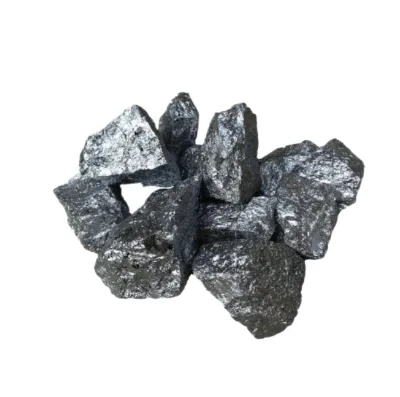
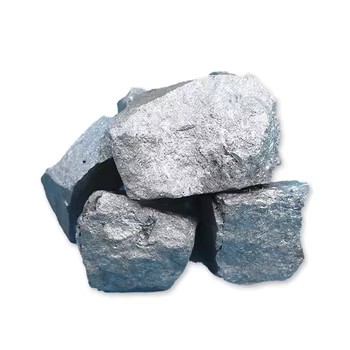
When evaluating product listings, attention must be paid to the observed color variations, which range from metallic silver lustre to black, reflecting different processing stages or impurity levels. The data shows that while some entries specify a grey appearance, others list black, suggesting that color alone is not a definitive quality indicator without accompanying chemical composition data. Sourcing teams should prioritize suppliers who explicitly link the physical appearance to the specific silicon brand, such as Si-441 or Si-424, to ensure the material meets the precise metallurgical standards required for high-strength steel or silicon steel production.
Product Scope and Observed Listing Signals
The market for industrial silicon metal lump presents a wide spectrum of product models, including specific identifiers like 6818# and 6515#, which denote distinct manufacturing batches or purity grades. Buyers must carefully cross-reference these model numbers with the stated chemical composition, which typically includes silicon, iron, aluminum, calcium, and carbon. The presence of multiple silicon brands in the data, ranging from Si-1101 to Si-553, indicates that the market offers specialized variants tailored for different industrial needs, requiring buyers to match the specific brand to their alloying requirements rather than assuming a generic grade will suffice.
Packaging and physical dimensions are critical logistical signals that influence shipping costs and storage requirements for bulk industrial buyers. The observed data highlights the use of Jumbo Bags for lump silicon, with single package sizes reaching 120x120x120 cm, which necessitates specific handling equipment and warehouse space planning. Additionally, the variation in single gross weights, such as the 1.200 kg figure noted for certain items, suggests that buyers must clarify whether they are purchasing individual units or bulk pallets to avoid discrepancies in freight calculations and inventory management.
Technical Specifications to Verify
Chemical composition is the primary technical parameter that determines the suitability of industrial silicon metal for specific metallurgical applications. The supplied facts indicate a composition of Si, Fe, Al, and Ca, with carbon content specified as low carbon in certain listings. Buyers must verify the exact percentage of aluminum and phosphorus, as the data mentions specific values like 0.3% Al and 40ppm P, which are critical for preventing brittleness in the final steel product. Without precise verification of these trace elements, the material may fail to meet the stringent requirements for wear-resistant steel or free-cutting steel applications.
Physical properties such as refractoriness and shape consistency are equally vital for ensuring performance during the smelting process. The data notes a refractoriness range of 1580°C, which is essential for maintaining structural integrity in high-temperature environments like steelmaking furnaces. Furthermore, the shape is described as lump, grain, or block, and buyers must confirm that the physical form aligns with their furnace design to ensure optimal dissolution rates. Verification of these physical attributes prevents operational delays and ensures the material delivers the expected volume stability and thermal shock resistance during production.
Compliance and Safety Documentation
While the provided data does not explicitly list specific safety certifications, buyers must request comprehensive documentation regarding the handling and storage of industrial silicon metal. The material is classified as a raw material with potential reactivity, necessitating clear safety data sheets that address the risks associated with dust generation and thermal properties. Procurement teams should ensure that suppliers provide documentation confirming the material's compliance with international transport standards, particularly given the high refractoriness and the potential for thermal shock resistance issues if the material is mishandled during transit.
Regulatory compliance extends to the origin and trade classification of the product, which is critical for customs clearance and duty assessment. The observed listings indicate origins in both Shandong and Shanxi, China, and a specific HS code of 28046900 is provided for the commodity. Buyers must verify that the supplier's documentation accurately reflects the country of origin and the correct HS code to avoid customs delays or penalties. Additionally, any claims regarding the material's purity, such as the 99% minimum or the 98.5%-99.9% range, must be supported by independent laboratory test reports to ensure regulatory adherence in the destination market.
Cost Drivers and Commercial Terms
The pricing structure for industrial silicon metal lump is influenced by the variability in observed listing prices, which range from $1.3 to $3095, reflecting differences in purity, brand, and packaging. Buyers should understand that the lower end of this range likely corresponds to standard grades or smaller quantities, while the higher figures may represent specialized brands or bulk contracts with specific customization requirements. It is essential to clarify whether the quoted price includes packaging, such as the Jumbo Bags mentioned, or if these are separate line items that will significantly impact the total landed cost.
Minimum Order Quantities (MOQ) and delivery timelines are significant commercial factors that affect cash flow and production scheduling. The data shows an MOQ range from 1 to 1000 units, with a specific mention of 5 metric tons for certain listings, indicating that bulk buyers may face higher volume thresholds. Furthermore, the observed delivery time of 15 days suggests a relatively standard lead time, but buyers must confirm if this applies to all silicon brands or only specific models. Understanding these commercial terms helps in negotiating favorable payment schedules and ensuring that the supply chain can meet production deadlines without interruption.
Supplier Qualification and Quality Control
Supplier qualification should focus on the ability to provide consistent product attributes across different silicon brands and models. The data lists multiple brands, including Si-441 and Si-424, which implies that a qualified supplier must have the capacity to manage a diverse inventory while maintaining strict quality control for each variant. Buyers should verify that the supplier has a proven track record in the iron and steel industry, as the application of the material is highly specialized and requires a deep understanding of metallurgical requirements to ensure the silicon meets the necessary deoxidizer and alloying standards.
Quality control processes must include rigorous testing of chemical composition and physical properties to match the observed specifications. The presence of specific purity claims, such as 99% minimum or 98.5%-99.9%, requires that suppliers have access to certified testing facilities to validate these figures before shipment. Buyers should request sample availability, noting that the data indicates "No" for some listings, which may necessitate a pre-shipment inspection or a third-party verification service to ensure the material matches the agreed-upon specifications for carbon content, aluminum levels, and refractoriness.
Long-Term Procurement Checks
Establishing a long-term procurement strategy requires regular audits of supplier performance against the observed product attributes and commercial terms. Buyers should monitor the consistency of the silicon brand and model numbers over time, as variations in the supply chain could lead to fluctuations in the chemical composition or physical shape of the material. Continuous verification of the origin, whether from Shandong or Shanxi, is also necessary to ensure that the supply chain remains stable and that the material continues to meet the specific requirements of the iron and steel industry without unexpected disruptions.
Future procurement checks must also evaluate the supplier's ability to adapt to changing market demands and customization needs. The data indicates that customization is available, suggesting that suppliers should be capable of adjusting their production to meet specific purity or composition requirements as the buyer's needs evolve. Regular reviews of the supplier's lead times and delivery performance are essential to maintain operational efficiency, ensuring that the 15-day delivery window remains reliable and that the supplier can scale production to meet increasing demand for high-strength steel and silicon steel applications.
FAQs
What forms does industrial silicon metal lump come in?
Industrial silicon metal is available in both lump and powder forms. The lump variety features a metallic silver lustre appearance and is commonly used as a raw material for steel and aluminum making. Customization options are available to meet specific buyer requirements for these distinct physical shapes.
Which brands of industrial silicon metal are available?
Several silicon brands are listed including Si-441, Si-424, Si-411, Si-1101, Si-2202, Si-3303, and Si-553. These products originate from China, specifically from Shandong and Shanxi regions. They serve as deoxidizers and raw materials for various metallurgical applications in the iron and steel industry.
How is the product packed and what is the MOQ?
The product is packed in Jumbo Bags with a single gross weight of 1.200 kg per item. The minimum order quantity is 5 metric tons, though observed ranges vary from 1 to 1000 units. Delivery typically takes 15 days from the point of origin in China.
What are the key chemical compositions of the silicon metal?
The chemical composition includes Silicon, Iron, Aluminum, and Calcium with carbon content classified as low carbon. Purity levels range from 98.5% to 99.9% minimum. Specific grades may contain 0.3% Aluminum and 40ppm Phosphorus, suitable for high-strength steel and silicon steel production.
Can buyers request customization for industrial silicon metal?
Yes, customization is available for this industrial silicon metal product. Buyers can specify requirements for different forms like lump or powder. The product supports OEM and ODM services, allowing tailored solutions for applications such as steelmaking, aluminum making, and deoxidization processes in various industries.
What are the physical properties of the silicon metal lump?
The lump form exhibits volume stability, thermal shock resistance, and high refractoriness up to 1580 degrees Celsius. It possesses good mechanical strength and acid resistance. The material is described as having a metallic silver lustre and is utilized for making wear-resistant steel and mold steel.
Where is the industrial silicon metal manufactured?
The product originates from China, with specific places of origin listed as Shandong and Shanxi. The standard product type is identified as lump or powder, and the HS code is 28046900. These locations supply the raw material for global steel and aluminum manufacturing sectors.